
The Enrollment Cliff Meets the Balance Sheet
A former university president on the board-level turnaround playbook for colleges facing the enrollment cliff and balance-sheet pressure at the same time — the early-warning signals, the financial discipline, and the governance decisions that keep a mission-driven institution solvent.
Demographics set the terms of the decade. What a college does about them is still a choice.
For most of the last century, an American college could grow its way out of almost any problem. A soft year in the endowment, a building that cost more than it should have, a program that never found its market — all of it could be absorbed by the next, slightly larger, slightly richer entering class. Enrollment was the tide that lifted every boat, and for a very long time the tide kept coming in.
It is going out now. The number of traditional college-age students in the United States has entered a structural decline that demographers saw coming years ago: according to WICHE's Knocking at the College Door projections, the annual number of U.S. high-school graduates will peak in 2025 and then fall roughly 13 percent through 2041 — the delayed echo of a birth-rate drop that began during the last financial crisis. This is the "enrollment cliff," and unlike a recession, it does not end. A smaller cohort of eighteen-year-olds is not a bad year to wait out. It is the new baseline. Moody's has identified hundreds of small, tuition-dependent private colleges already struggling to cover their costs from revenue — and for them, the growth that used to hide every other problem is simply gone.
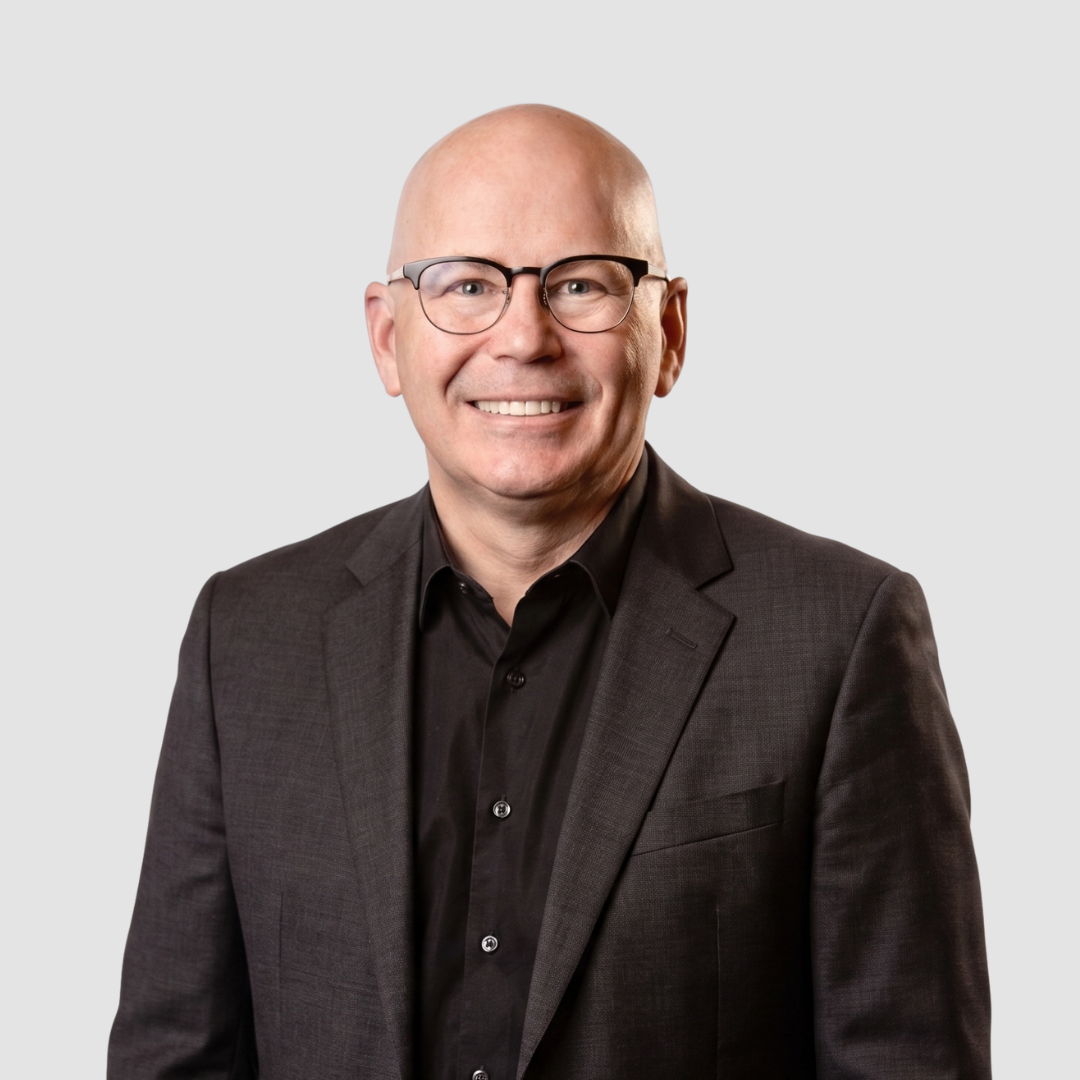
I spent three years as a university president during the hardest stretch this sector has faced in a generation, and I now help boards and leadership teams through exactly this problem at Inglewood. What I want to offer here is not alarm — there is enough of that — but a playbook. Because the institutions that will come through the next decade intact are not the ones with the largest endowments or the most famous names. They are the ones whose boards understood the balance sheet early, and acted while they still had options.
Two clocks are running at once
The reason this moment is so dangerous is that most colleges are being asked to manage two problems simultaneously, and the two are on different clocks.
The first clock is demographic and slow. Fewer students each year, more competition for each one, and a tuition-discount arms race that quietly erodes net revenue even when the headcount holds — NACUBO's 2024 Tuition Discounting Study found private institutions discounting first-year tuition by a record 56.3 percent. A college can watch this clock for years and tell itself a comforting story: enrollment is flat, not falling; the discount rate crept up only two points; next year's class looks promising. Each individual number is survivable. The trend underneath them is not.
The second clock is financial and fast. Deferred maintenance that finally forces a capital call. A covenant on a bond issue that tightens as coverage thins. A draw on the endowment that was meant to be temporary and has quietly become structural. These do not move slowly. They arrive as a letter, a board resolution, an auditor's note — and by the time they do, the slow clock has usually been running unheeded for a decade.
The enrollment cliff does not close a college. What closes a college is a balance sheet that was managed as if the cliff were temporary.
The institutions that get into real trouble are almost never surprised by the demographics. They are surprised by how fast the financial clock catches up once the slow one has done its work. A turnaround in higher education is really the work of getting both clocks onto the same dashboard — so the board is making decisions against the fast clock before the slow one has taken away its room to maneuver.
What I learned from the president's chair
When I was recruited to lead the University of Saint Francis, the assignment was the one this whole sector now faces in miniature: strengthen enrollment and endowment through the most competitive higher-education market in living memory. We did it — net tuition revenue rose, the entering class grew in two of three years, and we grew the endowment from $26 million to more than $40 million while returning the institution to an operating surplus. But the lesson I carried out of that chair was not about any single initiative. It was about sequence.
You cannot cut your way to health in an institution whose product is human attention, and you cannot grow your way out of a cost structure that is fundamentally too large for the enrollment you can realistically win. Both instincts, pursued alone, fail. What works is doing them in the right order: stabilize the finances enough to buy time, use that time to rebuild the academic and enrollment engine, and protect the mission-critical core so ferociously that the parts you do cut never touch the reason students chose you in the first place.
At Saint Francis that meant taking real cost out of places students never see — roughly $1.5 million out of IT through managed services, $2.2 million out of the insurance program — precisely so we would not have to take it out of the classroom. It meant launching new programs where genuine demand existed rather than defending every legacy offering out of sentiment. None of it was heroic. It was ordinary financial discipline applied earlier and more honestly than distressed institutions usually manage. That is the whole game.
The board's early-warning checklist
The single most valuable thing a board can do is learn to read the warning signs while they are still faint — because every one of them is far cheaper to fix early than late. In my experience these are the signals that a college's two clocks are drifting out of sync:
- The discount rate is climbing faster than anyone will say out loud. If it takes more institutional aid every year to enroll the same class, net tuition revenue is falling even when gross enrollment looks flat. This is the most under-reported number on most campuses.
- The endowment draw has quietly become operational. A draw above policy, repeated for more than a year or two, is not a bridge; it is a subsidy the balance sheet cannot afford, and it compounds. The NACUBO-Commonfund Study of Endowments reported institutions withdrew $33.4 billion from their endowments in FY25, an 11 percent jump year over year.
- Deferred maintenance is being treated as a savings. Every dollar of maintenance postponed is debt taken on at an interest rate no one has priced — Moody's Ratings estimates the colleges it rates face between $750 billion and $950 billion in facilities capital needs over the next decade. Boards should ask for the deferred-maintenance backlog in dollars, annually, and watch its slope.
- Covenant coverage is thinning. If bond or bank covenants are getting closer each year — even if none has been breached — the institution is losing financial flexibility precisely when it will need it most. S&P Global Ratings reported that twelve of the colleges it rates breached a covenant in a single year.
- The cabinet is managing to the annual budget, not a multi-year model. A one-year budget cannot see the enrollment cliff. Only a rolling multi-year financial model, stress-tested against a smaller class, can.
A board that reviews these five signals every year, and demands a straight answer on each, has given itself the one thing distressed institutions always wish they had more of: time. This is the heart of sound board advisory work — not governing the crisis, but seeing it early enough that it never becomes one.
Mission is the reason for solvency, not the exception to it
There is a particular trap that mission-driven and faith-based institutions fall into, and I say this as someone who spent thirty-five years inside one of those traditions. The trap is to treat financial discipline as somehow in tension with mission — as if watching the numbers were a worldly distraction from a higher purpose.
It is exactly backward. A mission that outruns its solvency does not get to continue. The chapel, the scholarship, the small seminar with twelve students and a professor who changes their life — none of it survives an insolvent balance sheet. Financial stewardship is not the enemy of mission. It is the precondition for it. The most mission-committed thing a board can do is insist that the institution remain solvent enough to keep serving the students it exists for.
Mission without solvency is a memory. The board that protects the balance sheet is protecting the mission — there is no other way to keep it.
This reframing matters because it changes who is willing to have the hard conversation. When financial candor is understood as an act of stewardship rather than a betrayal of ideals, presidents, provosts, and trustees stop avoiding it. The forecast gets built. The uncomfortable program review actually happens. The cash-flow discipline that a distressed company would take for granted finally comes to the campus that needs it most.
Turn around, or teach out — and how to know
Not every institution can or should continue independently, and one of the hardest services a board can render is to face that question honestly and early. The decision framework is not complicated, but it requires courage:
If the institution has a distinctive academic core, a realistic enrollment path even against the demographics, and a balance sheet with enough flexibility to fund the transition, then the work is a turnaround — and it should begin now, while there is still runway. If those conditions are absent, the responsible questions become different ones: a merger that preserves the mission inside a stronger partner, a strategic affiliation, or, in the last case, a teach-out that honors every obligation to current students. Inside Higher Ed counted at least sixteen nonprofit college closures in 2025, alongside seven mergers — the choice is increasingly being made, one way or another. Waiting does not preserve independence. It only guarantees that whatever happens will happen on someone else's terms, and usually worse ones.
The institutions that navigate this well are the ones that started asking the question a full cycle before they had to. That is the difference an experienced outside hand makes: not knowing your campus better than you do, but having sat with this exact decision many times, and being unafraid to name what the numbers are saying while there is still a full range of choices on the table. The companies that wait too long to call learn the same lesson colleges do — options are a wasting asset.
What it comes down to
The enrollment cliff is not a storm to be ridden out. It is a permanent change in the weather, and the colleges that thrive will be the ones that stopped waiting for the old climate to return and started building for the new one. That work is financial and academic at once, and it is above all a governance responsibility — the board's to see, the board's to fund, the board's to begin on time.
I have sat in the president's chair with both clocks running. The institutions that made it were not the luckiest or the wealthiest. They were the ones whose leadership treated the balance sheet as an instrument of the mission and acted while acting was still a choice. If your board is beginning to feel the pressure of both clocks at once, the time to build the plan is now — and that is the work we do, alongside boards and leadership teams, through Inglewood's Higher Education Advisory practice.
Frequently asked questions
What exactly is the "enrollment cliff"?
It is the structural decline in the number of traditional college-age students in the United States, driven by a birth-rate drop that began around the last financial crisis — a decline the Pew Research Center documented in real time, and whose smaller cohort is now reaching college age. Unlike a cyclical enrollment dip, it does not reverse on its own — it resets the baseline for tuition-dependent institutions for years to come.
We are enrolling roughly the same number of students. Are we actually at risk?
Possibly, and headcount can hide it. The number to watch is net tuition revenue after institutional aid. If your discount rate is rising each year to hold enrollment flat, real revenue is falling. Flat headcount with a climbing discount rate is one of the most common early signs of financial strain.
When should a board bring in outside help?
Earlier than feels necessary. The value of an experienced advisor is greatest while the institution still has options — runway, covenant flexibility, and time to rebuild enrollment. Waiting until a covenant is breached or the endowment draw is unsustainable narrows the choices to the worst ones. If two or more of the early-warning signals are present, it is time.
Is a merger or teach-out an admission of failure?
No. It is sometimes the most responsible way to preserve a mission and honor obligations to students. The failure is not in choosing a merger or an orderly teach-out; it is in waiting so long that neither can be done on good terms. Facing the question early is an act of stewardship, not surrender.
Experienced hands at critical turns.

Do I Need Help?
Not sure where you stand? Start the conversation.
A confidential, senior-level conversation. No junior teams, no obligation — just a clear read on where you are and what your options are.
Related insights
Keep reading
 Turnaround & Restructuring
The 13-Week Cash Flow Forecast, Explained
A plain-English guide to the 13-week cash flow forecast — what it is, why it is the single most important tool in a turnaround, how a rolling weekly model is built and used, and what separates a forecast a lender will trust from one it will not.

 Turnaround & Restructuring
Most companies wait too long to call. Here's the moment they should have.
Most owners call a turnaround firm only after the decision has been made for them. Here are the financial, operational, and crisis warning signs — and the moment to act while you still have options.

 Turnaround & Restructuring
What a Century of Turnaround Work Taught Us About Lenders
Over a century of combined turnaround experience on how seasoned restructuring teams earn lender trust, manage forbearance, read the special-assets desk, and turn a bank workout into a path forward for the middle market.