Inglewood Welcomes Bill Nolan, Partner — and Deepens a Bench Built for the Operator's Chair
Inglewood welcomes Bill Nolan, Partner — an operating CEO and Big Four diligence veteran — and explains why deepening a senior, partner-led bench is the firm's deliberate strategy after more than forty years.
There is a difference between an advisor who has only ever "consulted" and one who has run a growing business for 16 years. Inglewood was built on that difference. It is why the firm's newest addition matters — and why it tells a larger story about how the partnership is growing.
"Inglewood does not staff engagements with people who have read about distress. It staffs them with people who have lived it."
A partner who has sat in the chair
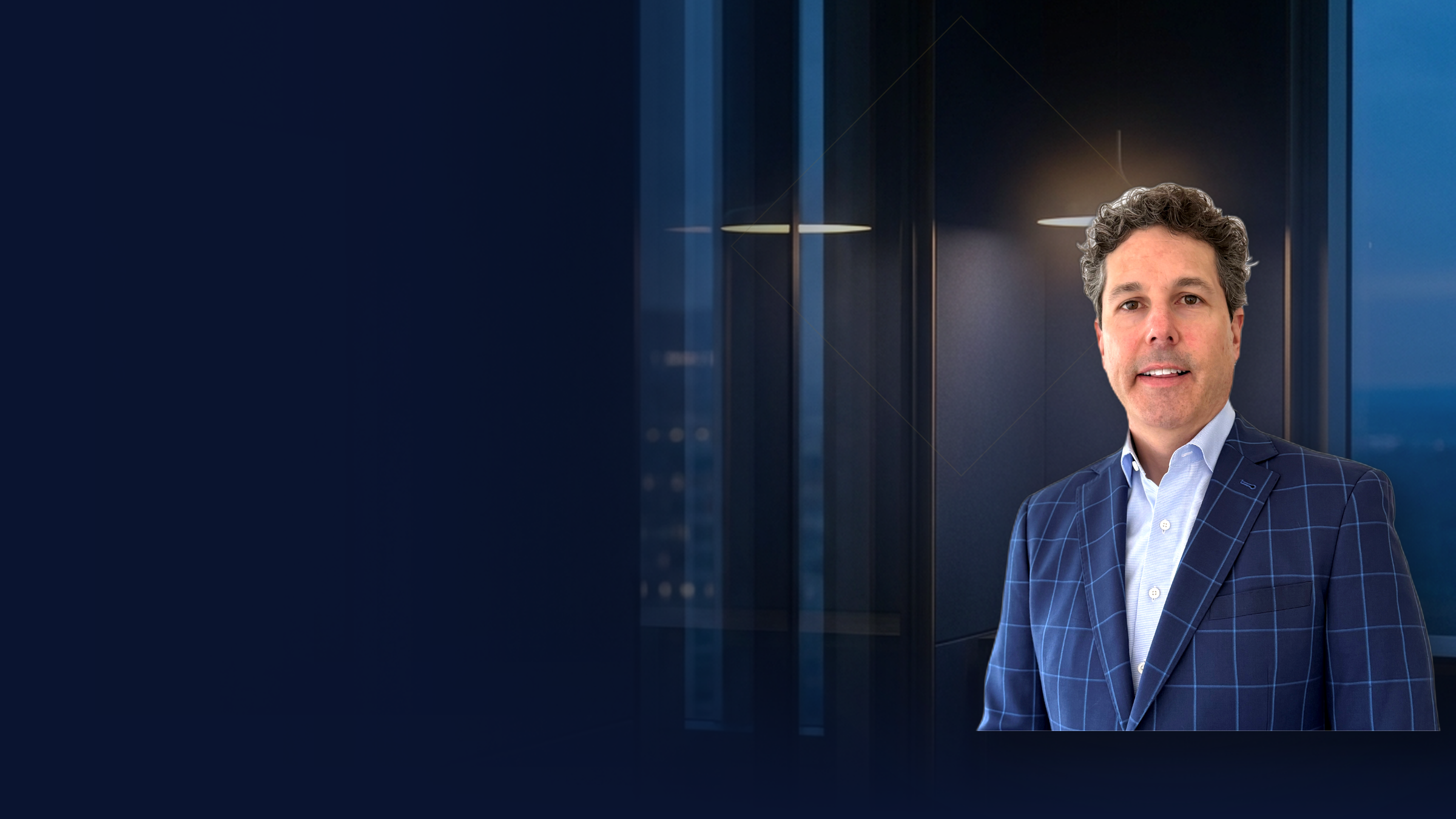
Bill Nolan has joined Inglewood as a Partner. For most of the last two decades, Bill was not advising operators — he was one.
As President and CEO of Standard Printing Company, a century-old Canton manufacturer, he led a seven-day-a-week operation of roughly 115 people producing more than 9,000 custom, time-sensitive orders a year. Under his leadership the company was deliberately transformed, shifting its revenue mix from sixty percent books and educational materials to ninety percent packaging and retail display — the higher-margin work where the market was actually moving.
The numbers tell the rest. Revenue and EBITDA grew over 3x. And in 2019 a buyer acquired sixty percent of the business — a transaction Bill did not hand off to bankers and watch from the sideline. He was integral to the sell-side diligence process himself: the quality-of-earnings work, the confidential information memorandum, the management presentations, the purchase-agreement negotiations. He has been on both sides of the table that most owners only ever see once.
That operating experience sits on top of a foundation in transaction work that few advisors can match. Before Standard Printing, Bill spent his early career in financial due diligence and audit at PwC and KPMG, on deals ranging from $8 million to $11 billion in value — including buy-side diligence on the landmark merger of the Chicago Mercantile Exchange and the Chicago Board of Trade. He earned the highest performance rating at each firm. He is a Notre Dame-trained accountant, with a Master of Science in Accountancy and a Bachelor of Business Administration from the Mendoza College of Business, where he now serves on the advisory council.
Why this profile fits Inglewood
Inglewood has had a single philosophy since a former Price Waterhouse partner founded the firm in 1983: business people first, not lifetime consultants. The work the firm does — business performance advisory, turnaround and restructuring, interim and crisis management, transaction advisory, and business transitions — does not reward theory. It rewards judgment earned in the operator's chair, under real pressure, with real consequences.
Bill's record is exactly that kind of judgment. He did not just grow a company; he led it through adversity, including supply-chain disruptions that stretched lead times from two or three days to three or four weeks and forced a complete rethink of how the business allocated resources and managed customers. He implemented the Entrepreneurial Operating System (EOS) across the full 115-person organization — the kind of disciplined-execution framework that separates a plan on paper from results in the field. His peers recognized the work: he was named to the Vistage Impact Award winner for Northeast Ohio.
His own advisory philosophy reads like an extension of the firm's. It begins with people and culture, holds that strategy without execution is theory, and treats growth not as a vanity metric but as the engine that funds innovation and creates opportunity for a team. That is the lens Inglewood brings to every engagement, whether a client is building, transitioning, or rebuilding.
"Inglewood does not staff engagements with people who have read about distress. It staffs them with people who have lived it — and that is a deliberate choice, not an accident of hiring."
The strategy behind the growth
Bill's arrival is one piece of a larger and intentional build. Inglewood is deepening its bench, and the criteria have not changed in four decades. The firm hires for one profile above all others: senior professionals who have carried real operating responsibility or sat through real transactions, and who can be trusted to lead an engagement from the first meeting rather than supervise it from a distance.
That standard sounds simple. It is in fact the hardest hiring discipline in the advisory business, and the reason most firms quietly abandon it. The economics of consulting reward leverage — a few partners selling the work and a deep pyramid of juniors performing it. Inglewood has chosen the opposite. The firm grows by adding partners and senior practitioners, not by stretching a thin layer of experience across an ever-larger base of inexperience. Every name added to the roster is added because that person can be put in front of a client, a lender, or a court on day one.
Bill widens the firm's reach in two directions at once. His operating tenure strengthens Inglewood's hand in performance improvement and interim leadership — the work of going inside a business and making it run better. His Big Four diligence background strengthens the transaction-advisory and valuation practice, where the difference between a clean deal and a painful one is often the quality of the analysis done before anyone signs. Few advisors carry both. Most have lived on one side of that line their entire careers.
What bench depth actually means for clients
For the owners, boards, lenders, and counsel who engage Inglewood, the practical effect of this growth is straightforward. It shows up in three ways.
Continuity of seniority. When a client calls Inglewood, the person who diagnoses the situation is the person who leads the work — a senior partner, every time, from the first conversation to the last. Deepening the partnership protects that promise as demand grows. It is one thing to pledge senior attention; it is another to have the bench to deliver it without exception, in every engagement, no matter how many run at once.
The right hand for the right problem. A liquidity crisis, a fractured ownership transition, a sell-side process, a court-supervised receivership, a turnaround that has to happen while the business keeps shipping product — these are different problems requiring different scars. A broader partnership lets the firm put the partner who has actually solved your specific problem in front of you, rather than the partner who happens to be available.
Speed without a learning curve. Distress does not wait for an advisory team to come up to speed. A partner who has already negotiated with lenders, already run a sell-side process, already kept a 115-person operation moving through disruption does not need three weeks to understand what is wrong. That compression of time is, in distressed and transitional situations, frequently the difference between a good outcome and a forced one.
What it sharpens across the practice
A senior hire is not only an addition to the roster; it changes what the firm can do in specific situations. Bill's dual background lands directly on the two kinds of work where the middle market is most underserved.
The first is the interim and crisis seat. When a business needs leadership in the chair — because a founder has stepped away, because a transition went sideways, or because the situation demands a steady hand the existing team cannot spare — the firm now fields a partner who has actually run a 115-person operation through real adversity. There is a difference between an interim leader who can read a P&L and one who has met payroll, renegotiated supplier terms under duress, and held a workforce together while the lead times on critical inputs tripled. Owners and boards can feel that difference within the first week.
The second is the front end of a transaction. Most middle-market sale processes are won or lost before the market ever sees the company, in the quality of the earnings analysis, the cleanliness of the data, and the credibility of the story management can tell. Bill spent years doing exactly that work for PwC and KPMG on deals up to $11 billion, and then ran the sell-side of his own company's recapitalization. He has prepared businesses to be diligenced and he has done the diligencing. That is a rare combination, and it raises the floor on every transaction-advisory engagement the firm takes — because the partner across the table has stood in both chairs and knows precisely what a buyer will probe.
Taken together, the hire is not a marginal expansion. It deepens the two practices where senior, operationally tested judgment is hardest to find and most valuable to a client under pressure.
The throughline
Firms describe their growth in headcount. Inglewood prefers to describe it in capability — specifically, in the depth of experience a client can reach on the day they need it most. Adding Bill Nolan is consistent with how this firm has grown for more than forty years: one senior, operationally tested professional at a time, each chosen because they have done the work, not merely studied it.
Clients building enterprise value, navigating a transition, or working through genuine financial pressure deserve advisors who have stood where they are standing. That is the bench Inglewood is deepening, and Bill Nolan is precisely the kind of professional it is built to attract.
To learn more about the firm's services or to start a confidential conversation, visit ingw.com.
Experienced hands at critical turns.

Do I Need Help?
Not sure where you stand? Start the conversation.
A confidential, senior-level conversation. No junior teams, no obligation — just a clear read on where you are and what your options are.
Related insights
Keep reading
 Firm News
Veteran Cleveland CFO Brian S. Kenyon Joins Inglewood
Inglewood welcomes veteran Cleveland CFO Brian S. Kenyon, the finance leader behind the $100M Gravitas sale and the Rock & Roll Hall of Fame's turnaround.
 Firm News
Higher Education Consulting Veteran Tim Novotny Joins Inglewood
Tim Novotny brings more than 45 years of higher education and not-for-profit experience to Inglewood's Higher Education Services Group.
 Firm News
Inglewood Launches Higher Education Consulting Group to Support Colleges and Universities
Inglewood launches its Higher Education Services Group, led by Sam Steinhouse, to help colleges and universities navigate financial headwinds.